Electricity is one of the largest ongoing costs in most industrial facilities, and motors are often the single biggest reason why. Pumps, fans, and conveyors running around the clock quietly consume enormous amounts of energy — often far more than they actually need to. Variable speed drives are one of the most effective, proven ways to cut that consumption without changing the equipment itself.
The Problem with Fixed-Speed Motors
Most motors connected directly to mains power run at one speed — full speed — regardless of what the process actually needs at any given moment. To control output, facilities often rely on mechanical restrictions instead: throttling a valve, using a damper on a fan, or running a pump against a bypass line. The motor keeps consuming full power while a mechanical device wastes the excess as heat or pressure loss. It works, but it’s remarkably inefficient.
How a Variable Speed Drive Changes This
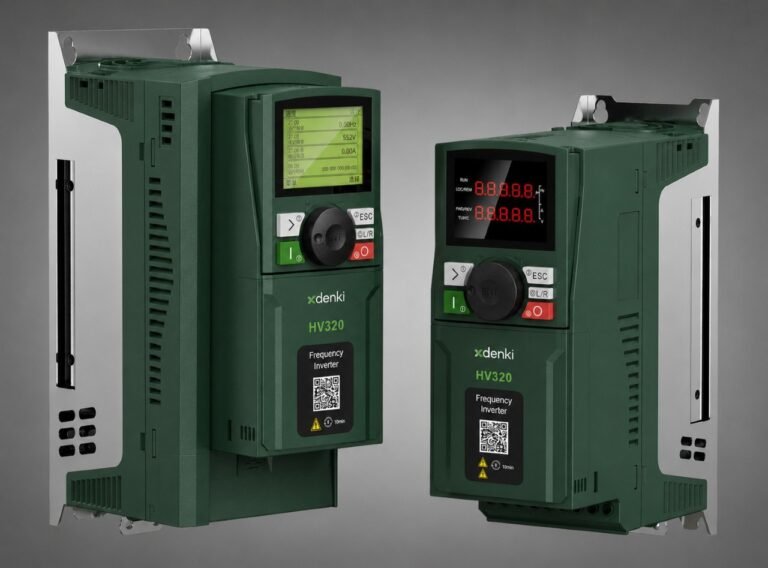
A variable speed drive (VSD) — also called a frequency inverter — controls a motor’s speed directly by adjusting the frequency of the power supplied to it. Instead of running the motor at full speed and wasting the excess mechanically, the drive slows the motor down to match exactly what the process needs. Less speed means less power drawn at the source, not power drawn and then thrown away.
Why the Savings Are So Significant
For centrifugal loads — the category that includes most pumps and fans — the relationship between speed and power isn’t linear. Power consumption follows what’s known as the affinity laws: it changes roughly with the cube of the speed. In practical terms, that means a relatively small reduction in speed can produce a disproportionately large reduction in energy use.
Example: reducing a fan or pump’s speed to 80% of full speed can reduce its power consumption to roughly 50% — because power scales with the cube of speed, not speed itself. Small speed reductions can produce large energy savings.
Approximate values based on the cube-law relationship for centrifugal pump and fan loads. Actual savings vary by application and system curve.
Beyond Fans and Pumps
While the cube-law relationship is strongest for centrifugal loads, variable speed drives reduce energy consumption in other ways across nearly any motor-driven process:
- Matching output to demand — conveyors, mixers, and compressors run only as fast as the process actually requires, rather than at a fixed maximum.
- Soft starting — eliminating the large inrush current draw of direct-on-line starting, which reduces peak demand charges in some utility structures.
- Reduced mechanical losses — removing the need for throttling valves, dampers, or mechanical bypasses that waste energy as heat or friction.
Calculating the Payback
Variable speed drives are one of the few automation upgrades with a genuinely fast, easy-to-calculate payback period. For a motor that regularly runs below full demand — which describes the majority of pumps and fans in real facilities — the reduction in electricity cost alone is often enough to pay back the cost of the drive within one to three years, before even accounting for reduced mechanical wear and maintenance.
Getting the Full Benefit
The energy savings from a variable speed drive depend on actually using variable speed — not just installing the drive and running it at a fixed output. Pairing the drive with feedback from process sensors (like a pressure or flow sensor) lets the system automatically adjust speed to match real demand continuously, capturing savings that a fixed setpoint would miss.
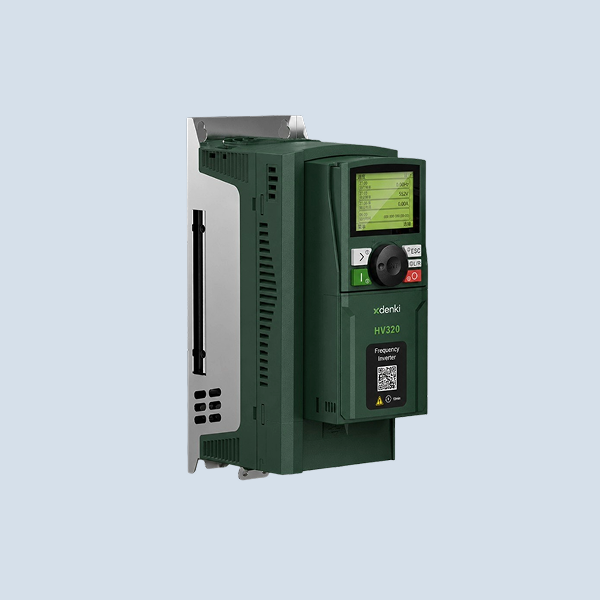
For facilities looking to cut energy costs on pumps, fans, and other motor-driven loads, the XDENKI HV320 Series Frequency Inverter delivers the precise, efficient speed control needed to capture real savings. With advanced vector control, a wide 0.4–800kW power range, and intelligent motor protection, it adapts output to actual process demand — turning wasted energy into measurable cost reduction.