
In food and beverage production, a process failure isn’t just a quality problem — it can trigger a recall, a regulatory investigation, or worse. That reality shapes automation decisions differently here than in most other industries: it’s not just about running efficiently, it’s about proving, with data, that every batch met the conditions it was supposed to.
Compliance as a Design Requirement
Food safety frameworks like HACCP require identifying critical control points in a process — temperatures, time durations, pH levels — and demonstrating that they were consistently met. Automation systems in food and beverage production increasingly need to be designed with this requirement in mind from the start, not added on afterward as a reporting exercise.
Where Automation Supports Compliance
Automated Critical Control Point Monitoring
Rather than relying on manual temperature checks logged on paper, automated sensors and PLC-based monitoring continuously track critical parameters — cooking temperature, pasteurization time, cold storage conditions — creating a complete, timestamped record without relying on someone remembering to check and write it down.
Washdown-Rated Equipment
Food production areas require regular, often aggressive cleaning and sanitization. Automation equipment installed in these zones needs an appropriate protection rating to withstand repeated washdown without water ingress compromising electrical components — a consideration that doesn’t apply the same way in most other industries.
Cold Chain and Multi-Site Visibility
For producers operating across multiple facilities or managing cold chain logistics, cloud-connected monitoring extends visibility beyond a single production line — tracking storage temperatures, equipment status, and process data across sites from a central dashboard, rather than requiring separate manual checks at each location.
Batch Traceability and Rapid Response
When a quality issue does arise, automated batch-level data — which ingredients, which process parameters, which equipment — makes it possible to trace the issue’s scope quickly and precisely, rather than facing a broad, costly recall because the affected batch can’t be isolated with confidence.
The underlying shift: automated data collection turns compliance from a manual paperwork exercise into a byproduct of normal production — the record exists because the process was monitored, not because someone remembered to log it.
Turning Existing Equipment into a Compliance Data Source
Many food and beverage facilities already have PLCs and sensors monitoring critical parameters locally — the gap is usually in getting that data recorded, aggregated, and accessible for audits or remote oversight. Connecting existing equipment to a cloud platform, without replacing the equipment itself, is often the most practical way to close that gap.
Product Spotlight
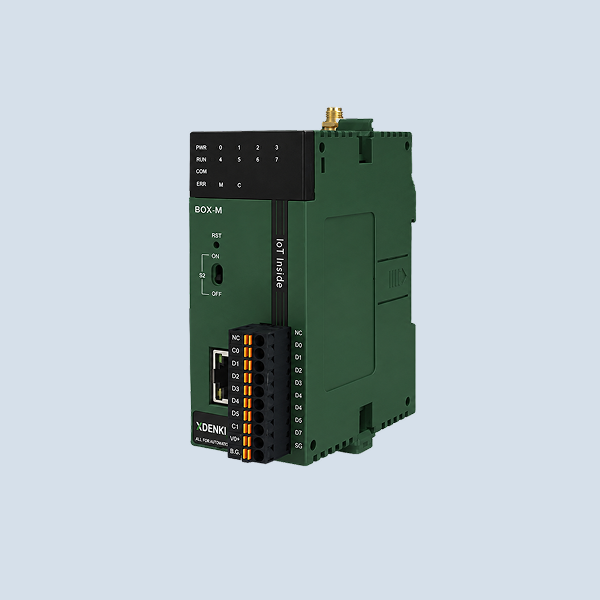
Turning critical control point data into a reliable, auditable record starts with connectivity, and the XDENKI H-BOX-M Series Industrial IoT Box makes that possible without replacing existing equipment. It connects to current PLCs and sensors, transmits data securely to the cloud, and provides real-time alarm notifications and remote monitoring — giving food and beverage producers the traceability and multi-site visibility that compliance increasingly requires.