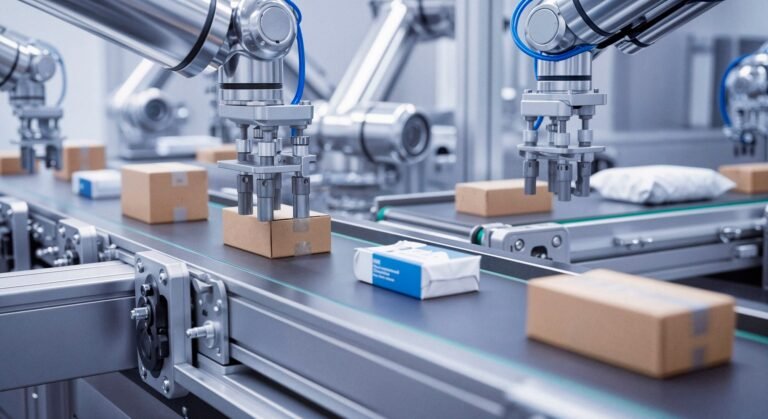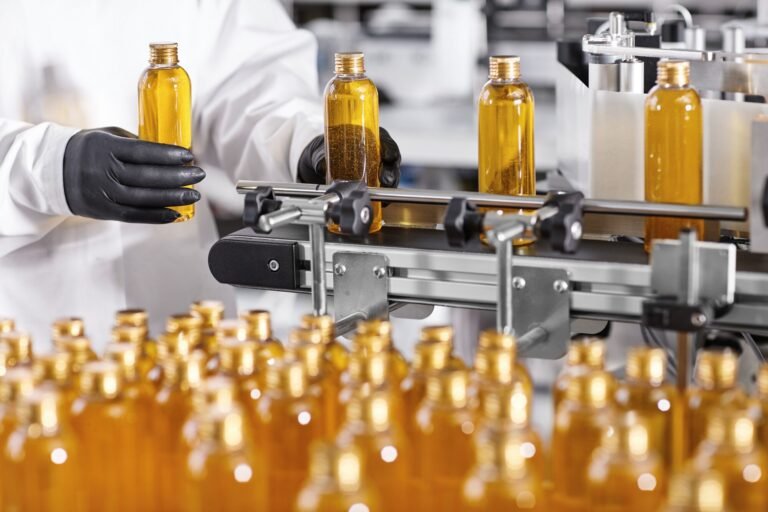
Manufacturing facilities rarely need just one piece of automation technology — they need several working together: controllers running the process, interfaces for operators, drives controlling motors, and increasingly, a way to see it all remotely. Understanding how these pieces map onto real manufacturing needs makes it much easier to plan an automation strategy that actually fits the facility, rather than adopting technology for its own sake.
What Manufacturing Facilities Actually Need from Automation
Across different types of manufacturing — discrete assembly, process manufacturing, packaging, machining — a handful of underlying needs show up again and again: reliable, repeatable process control; clear visibility for operators and managers; efficient motor control; and increasingly, remote access to production data. The specific equipment varies, but the goals are consistent.
Core Automation Needs on the Production Floor
1. Reliable Process Control
At the center of any automated line is a PLC coordinating equipment — sequencing operations, monitoring safety interlocks, and executing the control logic that keeps the process running consistently, shift after shift.
2. Clear Operator Interfaces
Operators need a fast, intuitive way to start and stop equipment, adjust setpoints, and see alarms — an HMI that turns raw process data into something actionable at a glance, without requiring specialized programming knowledge to use day to day.
3. Precise Motor Control
Conveyors, mixers, extruders, and countless other manufacturing processes depend on motors running at the right speed and torque. Frequency inverters provide the precise, energy-efficient control that fixed-speed motors simply can’t match.
4. Equipment Visibility and Uptime
Unplanned downtime is one of the most expensive problems in manufacturing. Real-time monitoring — whether through an HMI on the floor or a cloud dashboard reachable remotely — helps catch developing issues before they stop production entirely.
5. Data for Continuous Improvement
Production data — cycle times, downtime causes, quality metrics — is what turns “we think the line is running fine” into an actual, measurable understanding of performance, and what justifies future process improvements with real evidence.
The common pattern: a PLC controls the process, an HMI puts a person in the loop, inverters handle precise motor control, and connectivity extends visibility beyond the machine itself.
Scaling Across Multiple Lines and Facilities
A single machine’s automation needs are relatively simple to plan for. The complexity grows when a facility has multiple lines — or multiple sites — that need to be managed consistently. Standardizing on compatible controllers, communication protocols, and a shared cloud platform makes it possible to monitor and manage everything centrally, rather than treating each line as an isolated island.
Starting Small, Scaling Deliberately
Facilities don’t need to automate everything at once. A common, low-risk approach is starting with a single line or a single critical machine — proving the value of the PLC, HMI, and inverter combination in practice — before expanding the same approach across the rest of the facility.
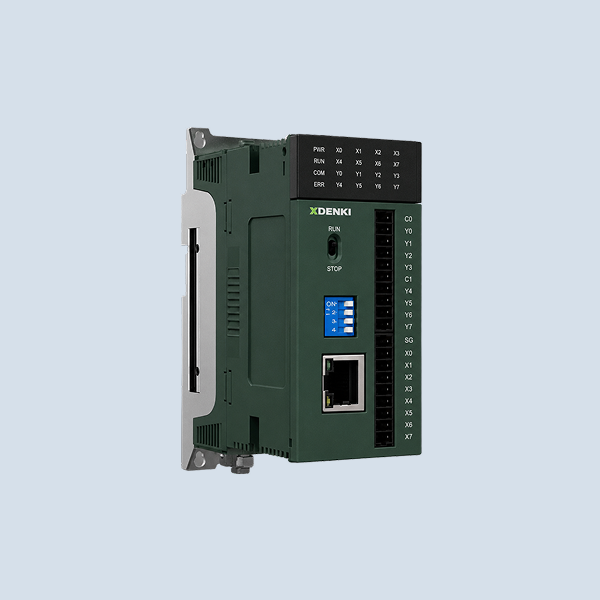
For manufacturing facilities looking to standardize process control across machines and lines, the XDENKI HCS Series Card PLC offers a compact, cost-effective foundation. With built-in Ethernet and RS485 communication, integrated cloud programming, and flexible I/O configurations across multiple CPU models, it scales from a single standalone machine to a network of coordinated equipment without unnecessary complexity.