HVAC systems are often one of the largest, most overlooked sources of energy waste in commercial and industrial buildings — running fans and pumps at full speed around the clock, regardless of actual demand. Intelligent control systems change that equation, matching output to real conditions instead of running everything flat-out all the time.
Why HVAC Deserves Special Attention
HVAC systems — heating, ventilation, and air conditioning — typically account for a significant share of a building’s total energy consumption. Unlike a production line that’s either running or not, HVAC demand fluctuates constantly with occupancy, outdoor temperature, and time of day, which makes it one of the clearest cases where intelligent, responsive control delivers measurable savings rather than theoretical ones.
Where Traditional HVAC Control Falls Short
Many older HVAC systems run fans and pumps at a fixed speed, using mechanical dampers or valves to throttle output when full capacity isn’t needed. As with any fixed-speed motor application, this wastes energy — the motor keeps drawing near-full power while a damper or valve discards the excess as wasted airflow or pressure. It works, but it leaves substantial savings on the table.
How Intelligent Control Improves HVAC Performance
1. Variable Speed Fans and Pumps
Frequency inverters let fans and pumps run at exactly the speed current demand requires, rather than full speed with mechanical throttling. Because power consumption for these loads scales roughly with the cube of speed, even modest speed reductions produce substantial energy savings.
2. Demand-Based Control Logic
A PLC can continuously adjust fan and pump speed based on real-time sensor feedback — temperature, humidity, or pressure — automatically matching output to actual demand instead of relying on fixed schedules or manual adjustment.
3. Zone-Level Coordination
Larger buildings often have multiple zones with different occupancy and demand patterns. Coordinated control across zones — rather than treating the whole building as one system — avoids over-conditioning unoccupied areas while still meeting comfort requirements where people actually are.
4. Centralized Monitoring
An HMI or cloud dashboard gives facility managers visibility into system performance, energy use, and alarms across the building — making it possible to spot inefficiencies or developing equipment issues without physically inspecting every unit.
5. Predictive Maintenance for HVAC Equipment
Motors, compressors, and fans in HVAC systems benefit from the same condition-based monitoring used elsewhere in industrial automation — catching a failing bearing or overheating motor before it causes a full system outage during peak demand.
The core shift: from HVAC systems that run at fixed output and get throttled mechanically, to systems that adjust their actual output to match real, changing demand.
Beyond Energy: Comfort and Equipment Life
Intelligent control doesn’t just reduce energy costs — it also improves comfort consistency by responding smoothly to changing conditions rather than cycling equipment on and off abruptly. Soft starting and precise speed control from variable speed drives also reduce mechanical wear on motors and fans, extending equipment life and reducing maintenance frequency.
Retrofitting Existing HVAC Systems
Upgrading HVAC control doesn’t require replacing fans, pumps, or air handling units. In most cases, adding frequency inverters to existing motors and layering in PLC-based demand control delivers the bulk of the efficiency gains, without the cost and disruption of a full mechanical system replacement.
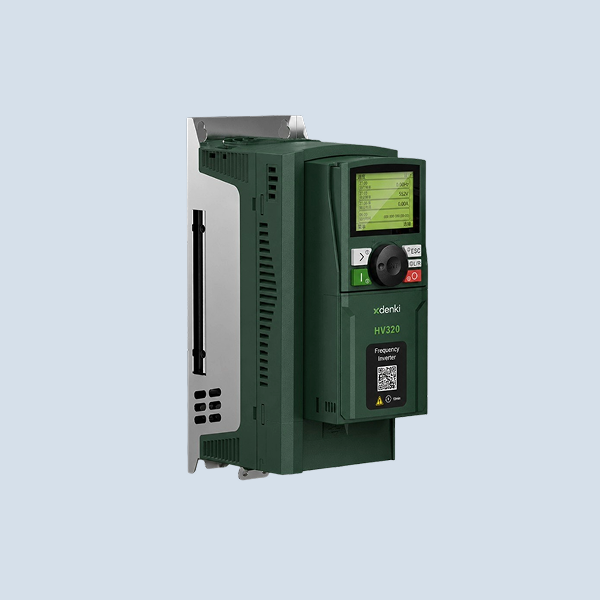
Variable speed control of fans and pumps is one of the most effective upgrades an HVAC system can receive, and the XDENKI HV320 Series Frequency Inverter is built for exactly this kind of application. With precise speed regulation, energy-efficient vector control, and reliable performance across a wide power range, it lets HVAC systems match output to real demand — cutting energy costs while keeping comfort consistent.