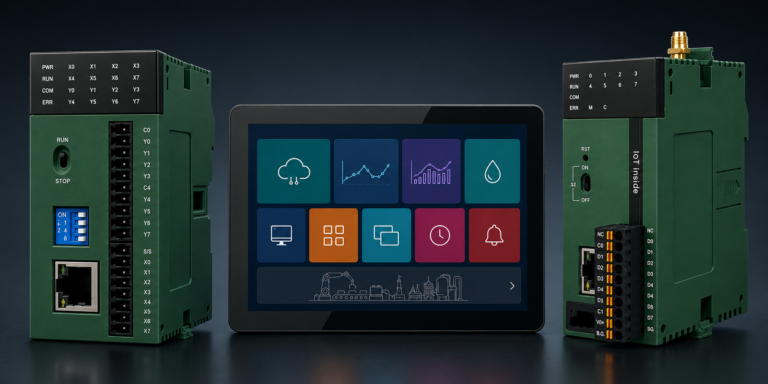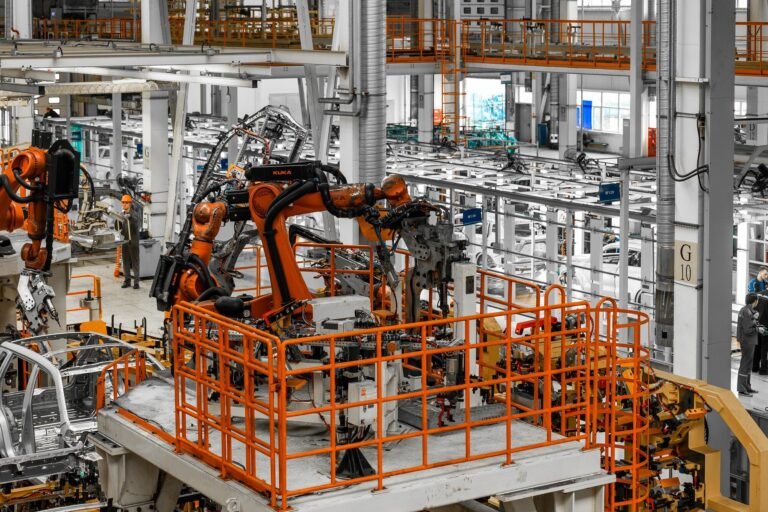
Reliability in an industrial control system isn’t the result of any single component — it’s the outcome of a series of deliberate design decisions, from I/O sizing to grounding practices to how faults are handled when they occur. This guide walks through the technical considerations that separate a control system that runs for years without issue from one that generates recurring, hard-to-diagnose problems.
1. Start with a Clear Functional Specification
Before selecting hardware, define exactly what the system needs to do: I/O count and type (digital, analog, safety-rated), required response time, communication protocols that must be supported, and expected duty cycle. Underspecifying I/O — assuming “close enough” — is one of the most common causes of costly rework once installation begins.
2. Size and Derate Components Properly
Every component in the system — PLC I/O modules, power supplies, contactors, inverters — has a rated capacity, and reliable systems don’t run components at their absolute limit continuously. Applying reasonable derating (typically sizing for 70-80% of rated capacity under normal operating conditions) provides headroom for transient loads and reduces long-term thermal stress on components.
3. Account for the Real Operating Environment
Ambient temperature range, humidity, dust, and vibration all affect component selection and enclosure design. Match the operating temperature range of PLCs, HMIs, and drives to actual site conditions — not just a typical office environment — and select an appropriate enclosure IP rating and cooling method (natural convection, fan-assisted, or filtered) based on the specific installation environment.
4. Address Power Quality and Grounding
Poor grounding and inadequate surge protection are recurring sources of intermittent, hard-to-diagnose faults. A properly designed system includes surge protection at incoming power feeds, a solid, low-impedance ground reference, and separation between power and signal wiring to minimize electromagnetic interference — particularly important near frequency inverters, which generate significant electrical noise.
5. Apply Redundancy Where It’s Justified
Not every system needs redundant controllers or power supplies — but for processes where downtime carries a high cost, redundant power supplies, network paths, or even controllers can prevent a single point of failure from stopping the entire operation. The decision should be based on the actual cost of downtime versus the added cost and complexity of redundancy, not applied uniformly.
6. Design the Safety System Deliberately
Emergency stop circuits, safety interlocks, and functions like Safe Torque Off (STO) on drives should be designed as a distinct layer, following applicable safety standards for the application — not treated as an afterthought layered onto the control logic. Safety circuits should also fail to a safe state on loss of power or communication, not depend on the PLC’s logic continuing to execute correctly.
7. Standardize and Document
Consistent naming conventions for tags and I/O, clear wiring diagrams, and documented network topology make a system dramatically easier to troubleshoot and maintain — both for the original integrator and for anyone who has to service it years later without the same institutional knowledge.
Reliability principle: a system fails reliably or unreliably based on how well it handles edge cases — power sags, communication drops, component derating — not just how well it performs under ideal conditions.
8. Test and Commission Thoroughly
Before full production use, verify I/O point-to-point, test safety functions under actual fault conditions (not just logically), and confirm communication reliability under realistic network load — not just at idle. Issues found during structured commissioning are far cheaper to resolve than the same issues discovered after the system is running in production.
9. Plan for Long-Term Maintainability
A reliable system today should stay reliable for years. That means selecting components with a stable, long-term availability roadmap, maintaining accessible spare parts, and choosing platforms with firmware update paths — so the system can be maintained and adapted over its service life rather than becoming obsolete and unsupportable.
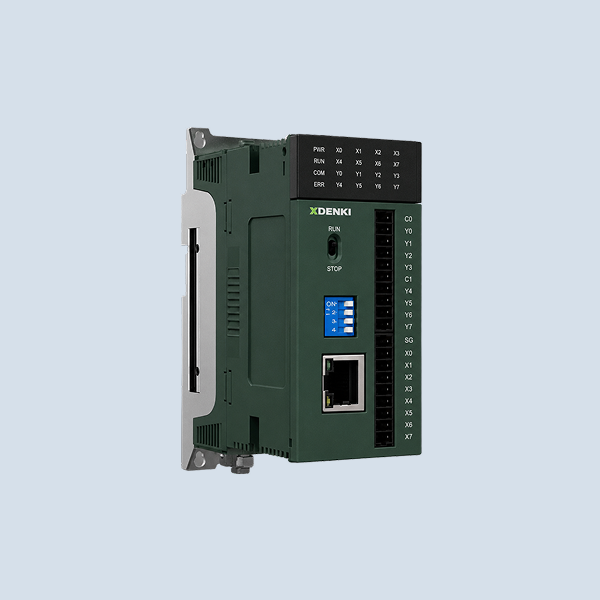
Reliability starts at the controller level, and the XDENKI HCS Series Card PLC is engineered with that in mind — offering multiple CPU models with flexible digital and analog I/O, isolated communication interfaces, and a compact card-type design that simplifies both initial specification and long-term maintenance, with built-in cloud diagnostics for ongoing system visibility.