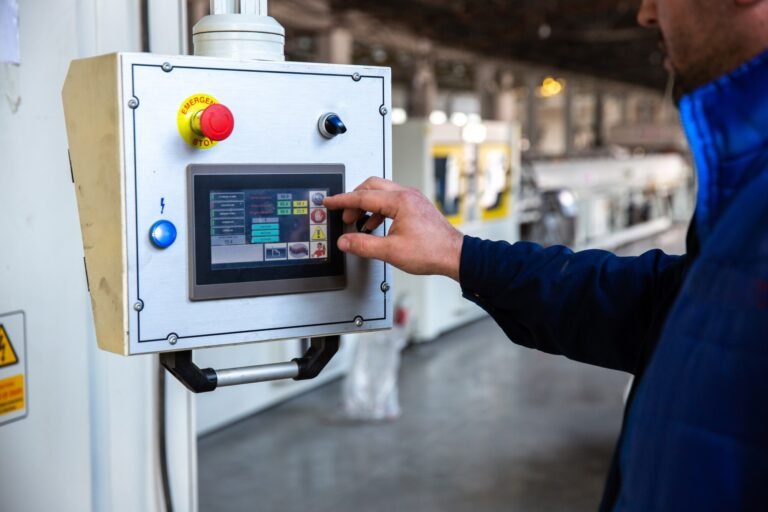
Most automation equipment failures are preventable — not because the equipment is fragile, but because small issues (dust buildup, loose terminals, a drifting sensor) go unnoticed until they cause a trip or a breakdown. A structured preventive maintenance schedule catches these issues on a predictable timeline instead of waiting for them to become downtime.
PLC and Control Panel
Monthly: Inspect for dust accumulation on modules and ventilation openings; check panel enclosure seals and door gaskets for wear; verify internal panel temperature is within the rated operating range.
Quarterly: Check tightness of terminal block connections (loose connections are a leading cause of intermittent faults); inspect wiring insulation for signs of heat damage or chafing; verify backup battery voltage on modules that retain memory via battery.
Annually: Back up the current PLC program and compare against the reference version on file; review I/O diagnostic counters for any modules showing early signs of degradation; confirm firmware versions across all modules are current and compatible.
HMI
Monthly: Clean the touchscreen surface with an approved cleaner (avoid solvents that can degrade the display coating); verify touch response accuracy across the screen, particularly in corners.
Quarterly: Review alarm and event logs for recurring faults that may indicate a developing problem elsewhere in the system; confirm communication link status with the PLC is stable.
Annually: Back up the HMI project file; verify recipe and parameter data matches the current approved configuration; check mounting hardware and enclosure seal integrity.
Frequency Inverters and Motors
Monthly: Inspect heatsinks and cooling fans for dust buildup; listen for unusual motor or bearing noise; check for unusual vibration during normal operation.
Quarterly: Verify tightness of power and motor terminal connections; check DC bus and fan operation under load; review fault history logged in the inverter for recurring trip codes.
Annually: Measure insulation resistance on motor windings; verify motor parameter settings in the inverter still match the connected motor’s nameplate; confirm acceleration/deceleration times are still appropriate for current load conditions.
IoT Gateways and Network Infrastructure
Monthly: Confirm cloud connectivity status and last successful data transmission timestamp; check for any unresolved communication alarms.
Quarterly: Verify signal strength on cellular/Wi-Fi connections where applicable; check Ethernet cable connections and switch port status for errors.
Annually: Update gateway firmware to the current stable release; review and rotate device credentials or certificates per the facility’s security policy; audit which devices have remote access permissions.
Practical tip: loose terminal connections and dust accumulation cause a disproportionate share of preventable faults across almost every equipment category — both take only minutes to check but are easy to skip without a formal schedule.
Setting Up a Maintenance Schedule
A practical schedule doesn’t need to be complex — a simple checklist tied to a calendar, with results logged for each inspection, is enough to catch the majority of preventable issues. What matters most is consistency: an inspection that’s supposed to happen monthly but only happens when someone remembers provides far less protection than the same inspection performed reliably on schedule.
Using Monitoring Data to Refine the Schedule
Where equipment is connected to real-time monitoring, historical trend data — temperature, vibration, current draw — can help refine maintenance intervals over time, shifting from a fixed calendar schedule toward genuine condition-based maintenance as confidence in the data grows.
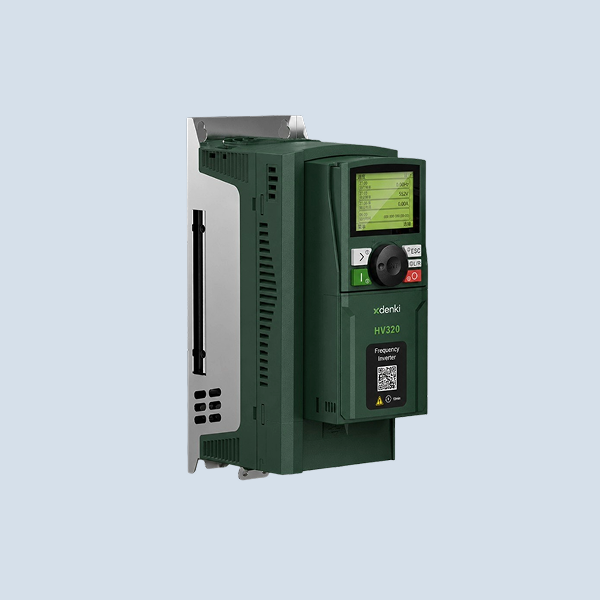
Frequency inverters are among the most maintenance-sensitive components on this checklist, and the XDENKI HV320 Series Frequency Inverter is designed to reduce that burden. Its independent air duct cooling design keeps dust away from the circuit board, while built-in fault logging and intelligent protection mechanisms make quarterly and annual inspections faster and more informative.