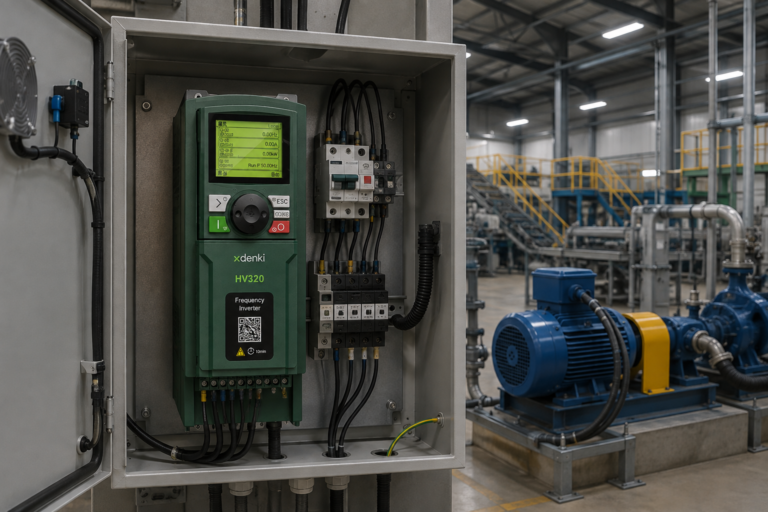
Motors are the workhorses of nearly every industrial facility — and also one of the largest, most consistent sources of energy consumption. Getting the most out of them isn’t about a single upgrade; it’s about getting the sizing, installation, power quality, and control right together. Miss any one of these, and even the most efficient motor on paper underperforms in practice.
Start with Correct Sizing
Oversized motors are extremely common — often selected with a generous safety margin “just in case.” The problem is that motors run most efficiently near their rated load; a motor running well below its capacity operates at a lower efficiency point than its nameplate rating suggests. Right-sizing a motor to the actual load, not a padded estimate, is one of the simplest and most overlooked efficiency improvements available.
Choose High-Efficiency Motor Classes
Motor efficiency is standardized into classes — IE1 through IE4 under the IEC standard, with higher numbers indicating greater efficiency. Upgrading from an older, lower-efficiency motor to an IE3 or IE4-class motor can reduce electrical losses meaningfully, particularly on motors that run continuously, where the efficiency difference compounds over thousands of operating hours per year.
Get Installation and Alignment Right
Even a well-selected, high-efficiency motor loses performance to poor mechanical installation. Shaft misalignment, improper belt tension, and worn couplings all introduce mechanical losses that show up as wasted energy and accelerated wear — problems that have nothing to do with the motor’s electrical design, but affect its real-world efficiency just as much.
Address Power Quality Issues
Motors are sensitive to the quality of the power supplying them. Voltage imbalance across phases, harmonic distortion, and voltage that’s persistently above or below the motor’s rated value all reduce efficiency and generate additional heat — heat that shortens motor life even before it shows up as a measurable energy cost.
Match Control Strategy to the Load
A correctly sized, high-efficiency motor still wastes energy if it’s run at full speed for a variable-demand application. Pairing the motor with a frequency inverter — using V/F control for simpler fan and pump loads, or vector control where precise torque and speed regulation matter — lets the motor’s efficiency be realized across its actual operating range, not just at one fixed point.
The pattern to watch for: a high-efficiency motor sized correctly, installed properly, running on clean power, and controlled to match actual demand — miss any one of these, and overall efficiency drops even if the motor itself is rated well.
Ongoing Maintenance Matters Too
Efficiency isn’t a one-time setup — it degrades gradually without proper upkeep. Routine bearing lubrication, keeping cooling fins and ventilation paths clear of dust, and monitoring for early signs of winding insulation breakdown all help a motor maintain its rated efficiency over its full service life, rather than quietly losing performance year after year.
Using Data to Track Efficiency Over Time
Connecting motor drives to monitoring systems makes it possible to track current draw, temperature, and runtime over time — turning “we think the motor is fine” into an actual, data-backed picture of whether efficiency is holding steady or gradually declining, and giving maintenance teams a clear signal for when intervention is actually needed.
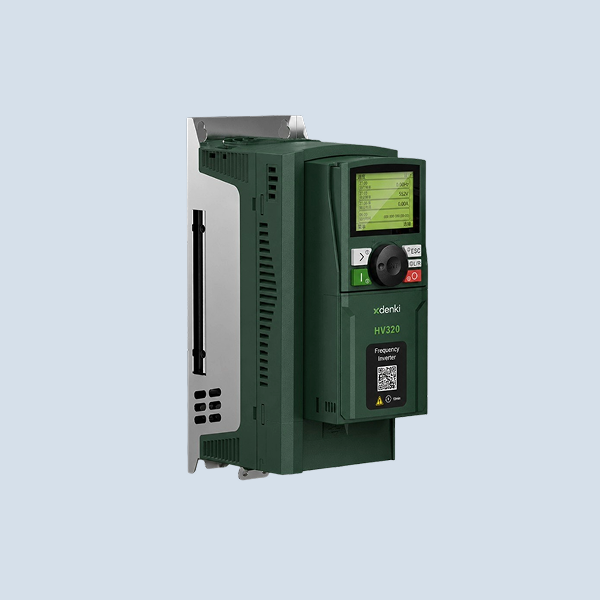
Matching control strategy to the load is one of the most effective levers in motor efficiency, and the XDENKI HV320 Series Frequency Inverter makes it easy to get right. With both V/F and vector control options, intelligent motor protection, and support for asynchronous and permanent magnet synchronous motors, it helps ensure a correctly sized, high-efficiency motor actually delivers on its rated performance across real operating conditions.