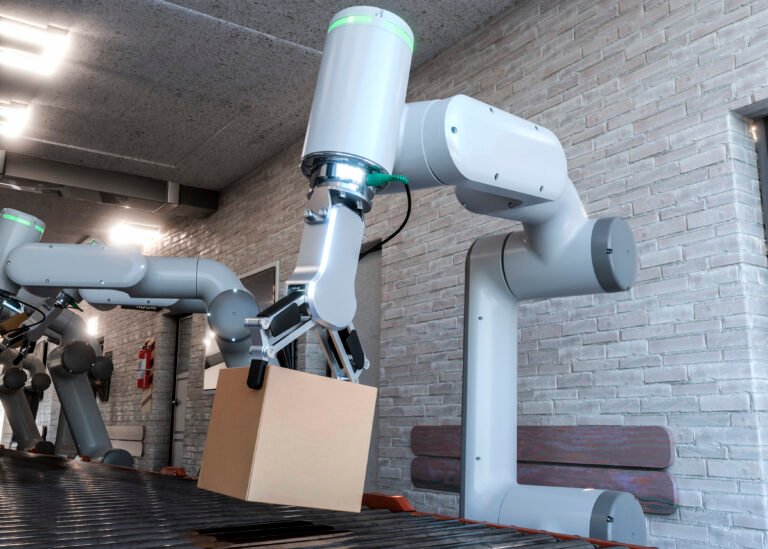
Factories, warehouses, and production lines look very different than they did a decade ago. Machines that once needed constant manual oversight now run themselves, correct their own errors, and report their status in real time. This shift has a name — industrial automation — and it’s reshaping how goods are made all over the world.
What Is Industrial Automation?
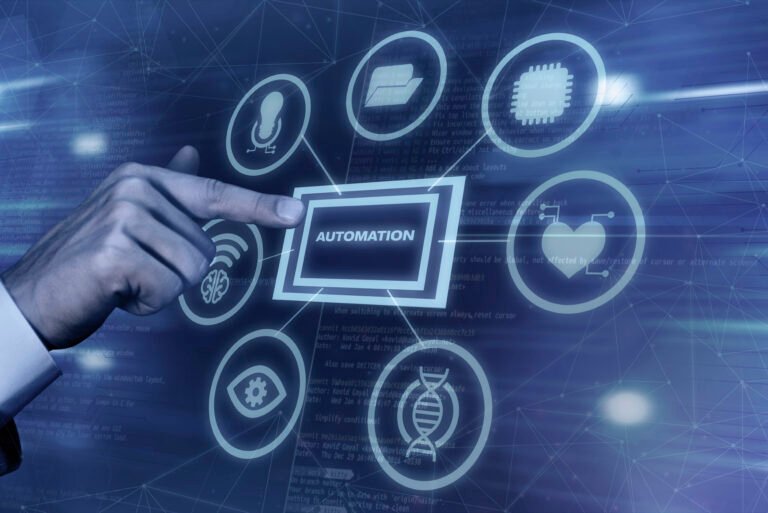
Industrial automation is the use of control systems — such as PLCs (Programmable Logic Controllers), HMIs (Human-Machine Interfaces), sensors, and communication networks — to operate equipment and processes with minimal human intervention. Instead of an operator manually starting a motor, adjusting a valve, or logging a temperature reading, an automated system handles these tasks continuously, consistently, and often faster than a person could.
At its core, automation replaces repetitive manual actions with programmed logic. A PLC reads inputs from sensors, makes decisions based on pre-set rules, and sends commands to actuators, motors, or valves — all within milliseconds, and all without needing a person to press a button.
The Core Building Blocks
- PLCs — the “brain” that executes control logic and coordinates equipment.
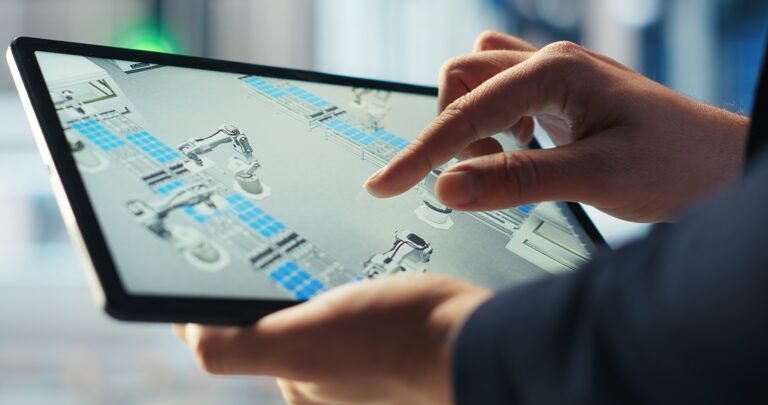
- HMIs — the touchscreen interface operators use to monitor and control the process.
- Sensors and actuators — the “eyes and hands” that measure conditions and physically act on them.
- Communication networks — Ethernet, RS485, MQTT, and similar protocols that let devices exchange data with each other and with the cloud.
In short: industrial automation is the combination of hardware and logic that lets a process run itself — reliably, repeatably, and with far less room for human error.
Why Does It Matter?
Automation isn’t just about replacing labor — it’s about achieving a level of consistency, speed, and visibility that manual operation simply cannot match. A handful of reasons explain why manufacturers across nearly every industry continue to invest in it.
1. Consistency and Quality
A machine follows the same programmed sequence every single time. It doesn’t get tired, distracted, or inconsistent from one shift to the next. This translates directly into fewer defects and more predictable product quality.
2. Higher Throughput
Automated systems can run continuously, adjust speed dynamically, and coordinate multiple machines in sync — something that’s difficult to achieve with manual control alone.
3. Safety
Automation can take over tasks in hazardous environments — high temperatures, heavy machinery, confined spaces — reducing the exposure of workers to injury risk.
4. Data and Visibility
Modern automation systems don’t just run a process — they report on it. Real-time data from HMIs and IoT gateways gives operators and managers visibility into performance, downtime, and maintenance needs, often before a small issue becomes a costly failure.
5. Lower Long-Term Costs
While automation requires upfront investment, it typically pays for itself through reduced waste, lower energy consumption, less unplanned downtime, and reduced dependency on manual labor for repetitive tasks.
Where Automation Is Headed: Industry 4.0
The next phase of industrial automation goes beyond controlling a single machine — it connects entire facilities. Industry 4.0 combines traditional automation (PLCs, HMIs, drives) with cloud connectivity, IoT gateways, and remote monitoring, so equipment on the factory floor can be managed, diagnosed, and optimized from anywhere. This is where automation and the Industrial Internet of Things (IIoT) meet: the same PLC that controls a machine can now report its status to a cloud dashboard, trigger an alarm on an engineer’s phone, or receive a firmware update without anyone visiting the site.
Getting Started with Industrial Automation
For manufacturers evaluating automation for the first time, the starting point is usually the same: a reliable controller (PLC) to run the logic, a clear interface (HMI) for operators, and a way to connect it all together. From there, capabilities like remote monitoring, cloud diagnostics, and data logging can be layered on as needs grow.
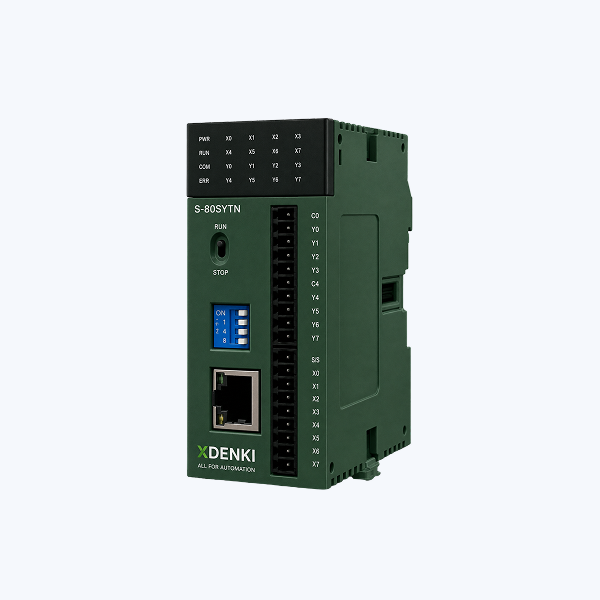
If you’re taking your first step into industrial automation, the XDENKI HCS Series Card PLC is a natural starting point. It’s a compact, cost-effective programmable logic controller with built-in Ethernet and RS485 communication, integrated cloud programming, and flexible digital/analog I/O — everything needed to automate a standalone machine or a small production line without unnecessary complexity.