Energy is one of the few operating costs a facility can actually reduce without cutting production if the right systems are in place. Automation doesn’t save energy through one single trick; it saves energy through several distinct mechanisms working together, each targeting a different source of waste that’s easy to overlook in day-to-day operation.
1. Variable Speed Motor Control
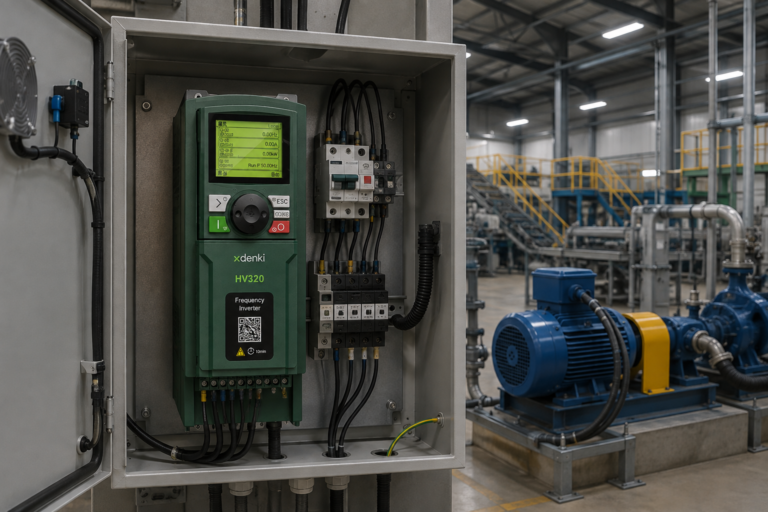
Fixed-speed motors run at full power regardless of actual demand, relying on mechanical throttling — valves, dampers, bypass lines — to control output. Frequency inverters eliminate this waste by adjusting motor speed directly to match demand. For centrifugal loads like fans and pumps, power consumption scales roughly with the cube of speed, so even modest speed reductions produce outsized energy savings. This is consistently one of the highest-impact, fastest-payback automation upgrades available.
2. Eliminating Idle and Standby Waste
Equipment left running — or left in a high-power idle state — outside of production hours is a surprisingly common source of waste. Automated scheduling can power down or reduce non-critical equipment automatically during off-shifts, weekends, or planned downtime, capturing savings that are easy to overlook when shutdown depends on someone remembering to do it manually.
3. Demand-Based Process Control
Rather than running equipment at a fixed output regardless of need, PLC-based control can continuously adjust output based on real-time sensor feedback — temperature, pressure, flow — matching energy input to actual process requirements at every moment, instead of over-producing “just in case.”
4. Preventing Efficiency Loss from Equipment Degradation
Aging or poorly maintained equipment often becomes less energy-efficient long before it actually fails — a motor with worn bearings, a fan with a slipping belt, or a compressor with a refrigerant leak all draw more power to do the same work. Predictive maintenance, enabled by real-time condition monitoring, catches this gradual efficiency loss and addresses it before it becomes a significant, ongoing energy cost.
5. Data-Driven Optimization
You can’t reduce what you can’t measure. Automated data collection — through HMIs, PLCs, and IoT gateways — gives facilities visibility into exactly where and when energy is being consumed, making it possible to identify inefficient equipment, unusual consumption patterns, or opportunities for process changes that wouldn’t be visible without the data.
The common thread: every one of these savings comes from matching energy use to actual need — whether that’s motor speed, operating hours, process output, equipment condition, or overall visibility.
Where to Start
Of these five, variable speed motor control on fans, pumps, and other continuously running loads is typically the fastest and most measurable win — the energy math is straightforward, and the payback period is often short enough to justify on its own. From there, layering in monitoring and demand-based control compounds the savings further over time.
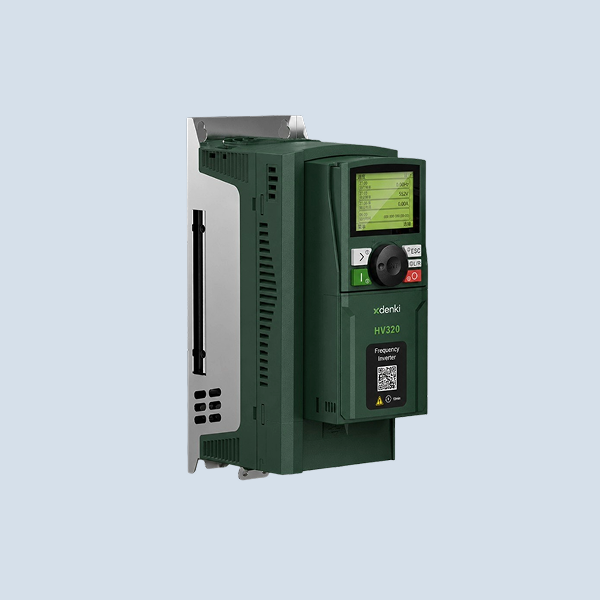
If variable speed control is the starting point for reducing energy costs, the XDENKI HV320 Series Frequency Inverter is where to begin. With precise vector control, a wide 0.4–800kW power range, and intelligent motor protection, it lets fans, pumps, and other motor-driven loads run at exactly the speed the process needs — turning wasted energy into measurable, ongoing savings.